

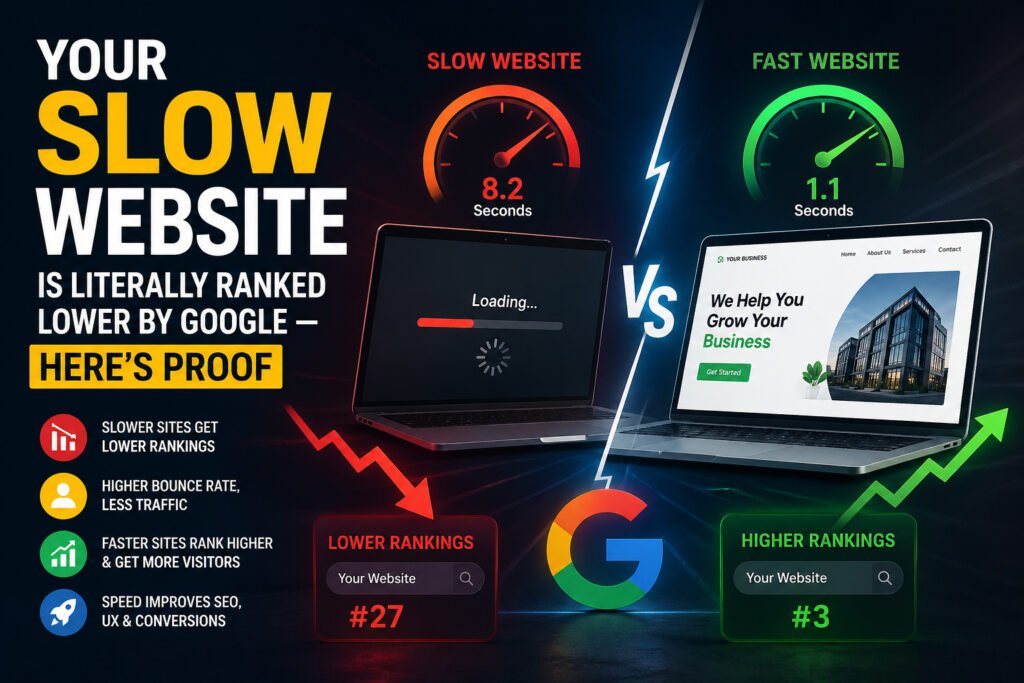
If your website is slow, the damage is bigger than most businesses realize. It doesn’t only frustrate visitors. It can reduce your search visibility, weaken trust, lower conversions, and send customers to competitors with faster websites. Many companies spend money on design, ads, and social media while ignoring the one issue that affects everything else: website speed.
In 2026, people expect instant results online. They open apps in seconds, browse smooth shopping stores, and get answers immediately from search engines. When they land on a slow website, patience disappears fast. Most visitors won’t wait. They leave, click another result, or decide the business feels outdated.
That means a slow website can quietly cost you traffic and sales every day.
Does Google Really Rank Slow Websites Lower?
Yes, website speed can influence rankings. Google’s goal is to show users the best results possible. That includes pages that are helpful, relevant, secure, mobile-friendly, and fast enough to create a smooth experience.
Speed is not the only ranking factor. Great content still matters most. Strong backlinks matter. Search intent matters. But when multiple websites offer similar quality information, performance can become the difference maker.
Google has repeatedly emphasized user experience signals, including page performance. If your competitors have similar authority but faster websites, they may gain an edge over time.
Why Slow Websites Lose Rankings
A slow website creates several problems at once.
First, users abandon pages quickly. If someone clicks your result and the page takes too long, they often return to search results. That means lost engagement and missed trust.
Second, slow websites reduce browsing depth. Visitors are less likely to explore service pages, blog posts, product pages, or contact forms when every click feels delayed.
Third, poor speed often hurts mobile users the most. Since a huge portion of traffic comes from phones, weak mobile performance can damage rankings and conversions together.
Finally, search engines want to recommend pages’ users enjoy using. If your site feels frustrating, it becomes harder to compete.
The Real Proof Is in User Behavior
You do not need complicated technical reports to understand the problem. Look at how people behave online.
If your page loads in one or two seconds, visitors usually stay calm and continue browsing. If it loads in five or six seconds, many users feel something is wrong. By eight seconds or more, many people have already left.
That behavior matters because search engines monitor patterns over time. A page that disappoints users regularly can struggle compared with pages that satisfy visitors faster.
This is why two businesses in the same industry can have similar services, similar pricing, and similar content—but one ranks higher and converts better simply because the website performs better.
How a Slow Website Hurts Sales Too?
Even if rankings stayed the same, slow speed would still be expensive.
Imagine paying for ads, SEO, or social media traffic and then sending those visitors to a slow website. You already paid to earn the click. Then speed problems waste the opportunity.
A slow website can reduce:
- Form submissions
- Calls and inquiries
- Product purchases
- Booking requests
- Time spent on site
- Repeat visits
Visitors often judge professionalism through performance. If your site feels outdated or sluggish, they may assume your service is the same.
Common Reasons Websites Become Slow
Many business owners think slow speed means they need a new website. Sometimes that’s true, but often the causes are fixable.
Common problems include oversized images, poor hosting, too many plugins, messy code, auto-playing videos, excessive scripts, and no caching system. Sometimes businesses add tool after tool over time until the website becomes bloated.
WordPress sites especially can slow down when too many unnecessary plugins are installed or low-quality themes are used.
The good news is that many of these issues can be corrected without rebuilding everything from scratch.
How to Check If Your Website Is Slow
If your website feels slow to you, it is usually worse for new visitors. You are already familiar with it, your browser may cache files, and your internet may be stronger than many customers.
You can test performance using trusted tools such as Google PageSpeed Insights, GTmetrix, or Lighthouse reports. These tools reveal loading speed, mobile issues, image problems, and user experience weaknesses.
Look carefully at mobile results, not only desktop. Many businesses focus on desktop scores while most real users arrive on phones.
What Speed Improvements Usually Help Most
You do not always need a total redesign. In many cases, targeted optimization can create dramatic improvements.
Start by compressing large images and converting them into modern formats. Upgrade poor hosting if your server is slow. Remove plugins or scripts that add no real value. Use caching and content delivery systems where appropriate. Clean unnecessary code and simplify heavy page builders.
Sometimes even changing a few technical bottlenecks can cut loading time significantly.
Why Fast Websites Win More Than Rankings
Speed improves more than SEO. It improves the entire customer journey.
A fast website feels modern, trustworthy, and professional. Visitors move smoothly from homepage to services to contact page. They stay longer, explore more, and convert at higher rates.
That means website speed is not just a technical metric. It is a growth tool.
Businesses that treat speed seriously often see benefits across:
- Organic traffic
- Paid ad performance
- Conversion rates
- Brand trust
- Lead generation
- Customer satisfaction
What This Means for Your Business in 2026
Competition online is stronger than ever. Many industries now have dozens of businesses fighting for the same local searches, same customers, and same attention.
If your competitor’s website loads faster, feels cleaner, and converts better, they gain advantages every day—even if your actual service is better.
That is why speed should not be postponed. Every month you delay can mean lost leads and weaker rankings.
Final Thoughts
Your slow website may already be ranked lower than it deserves. Even when speed is not the only reason, it often becomes the hidden factor that stops growth.
You can keep spending on ads and content while traffic leaks away, or you can fix the foundation first.
A faster website creates a better user experience, stronger trust, better rankings, and more sales. In many cases, improving speed is one of the highest-return upgrades a business can make.
Need Help Fixing a Slow Website?
At Design Innovacia, we help businesses improve website speed, user experience, SEO performance, and conversions. If your website feels slow or rankings have dropped, now is the time to fix it. A faster site can become your biggest growth advantage.
